China and Global AI Governance
You cannot build global AI governance by only talking to countries you agree with. Europe must engage with China, as well as the USA and enforce its own AI Act.
You cannot build global AI governance by only talking to countries you agree with. Europe must engage with China, as well as the USA and enforce its own AI Act.
What’s the Irish Presidency’s International AI Summit on 14 October actually about?
My concern is that it looks set up to be more of a trade fair than policy-focused initiative, “the Ploughing” for tech bros.
I questioned Minister Niamh Smyth today on how the Irish presidency will balance the rights of artists with the needs of AI tech companies, many of which have their headquarters in Ireland.
This week, the European Parliament has voted by a broad majority to introduce a ban on AI “nudifier” tools, proposed by Independent MEP Michael McNamara.
The ban, which will come into effect on 2 December of this year, will outlaw AI systems designed to generate fake nude or intimate images of real people without their consent, closing what McNamara identified as a major gap in existing laws.
“Recent controversies involving AI systems, demonstrated there was no clear prohibition on the technology which was being used to generate highly realistic fake nude images of real people, of which the overwhelming majority of victims were women and girls. I pledged to change that when I was appointed as a Rapporteur in the Parliament. Following negotiations with the Council, the passing of this legislation will ensure that this abuse will no longer be allowed.”
The updated rules also extend compliance deadlines for certain high-risk AI systems, giving businesses and public authorities additional time to prepare while maintaining key safeguards.
“Irish companies and SMEs, particularly in the tech and manufacturing sectors, needed certainty. They couldn’t comply with rules when the technical standards hadn’t even been written yet. We’ve fixed that, without removing the protections that make this legislation worth having.”
McNamara said the final agreement strikes a practical balance between encouraging innovation and protecting citizens from harmful uses of artificial intelligence.
“As the capabilities of AI continue to expand at a startling rate, so too does the potential for both good and harm. It is our responsibility to ensure that these technologies are developed and deployed in a way that respects people’s rights and dignity.”
Disastrous-decision making by successive governments in many states has left Europe woefully unprepared for the current technological expansion.
Rash deregulation is not the solution.
A recent study by ETH Zurich and Anthropic revealed that AI can be used to identify pseudonymous online users at scale.
I questioned the EDPB on it’s implications and the upcoming European GDPR guidelines and how they will be implemented across the member states.
Faced with the power of huge corporations and their lobbying, often targeting the Irish government specifically, it is vital that we have appropriate AI regulation backed by strict enforcement to ensure compliance.
See my full interview on Oireachtas TV here: https://youtu.be/5eaySNZ6gN8
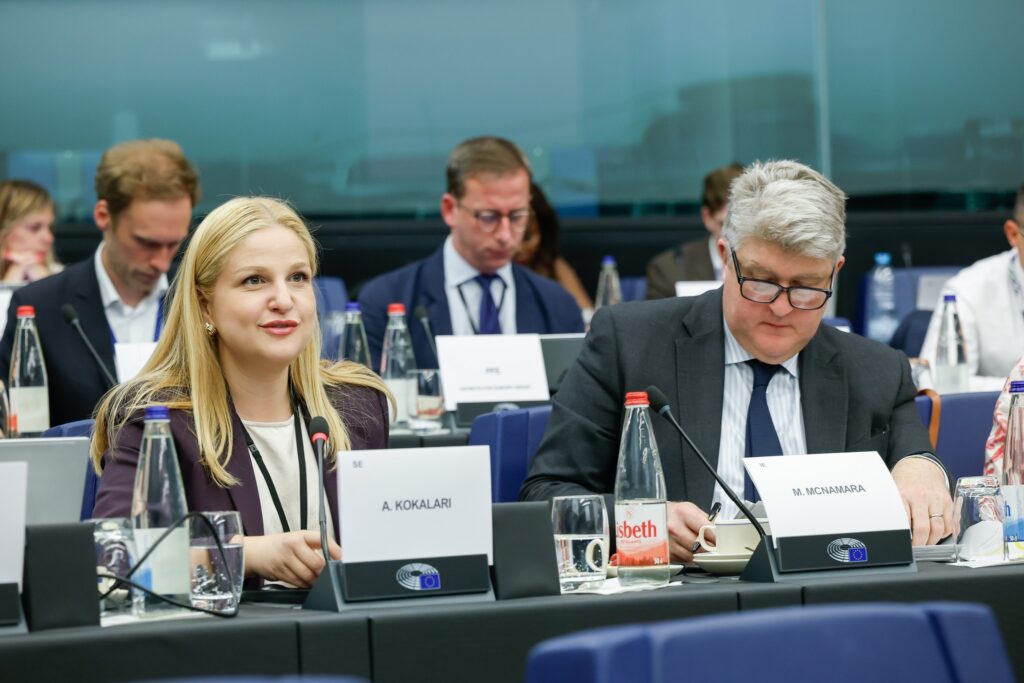
At the FEMM public hearing on AI and Gender-Based Violence, I spoke about the importance of effective drafting on a ban on so-called nudification apps.